
The ADA Just Changed the Rules for Hospitalized Diabetes Tech, But Most Hospitals Aren't Ready
What the 2026 Standards actually recommend and at what evidence grade, the five conditions attached to the pump recommendation, what a workable protocol has to answer, and why this becomes pharmacy's problem.

The "Coin Flip" Diagnostic: Why Your MRSA Nasal Swab is Smarter (and Dumber) Than You Think
The numbers behind MRSA nares screening, why the negative predictive value depends on your prevalence rather than on the test, where it does not apply, and what a pharmacist-driven protocol actually achieved.
Why Your Gout Treatment Stopped Too Early: The 300 mg Myth
Three strong recommendations in the ACR gout guideline are the three most routinely skipped: treat to a number, allopurinol first even in kidney disease, and prophylaxis for three to six months. Why each one fails and what a pharmacist can check.
The Simple Logistics Fix Slashing Hospital Readmissions by Half
What the Emory meds-to-beds cohort actually found, why a retrospective design cannot settle whether the program caused the difference, and the exclusion that shaped the comparison.

The 22-Year Mistake: Why the FDA Just Rewrote the Rules on Vaginal Estrogen
Which four warnings came off, which one stayed and on what, why the reversal happened, and why the product that benefits most is the one with almost no systemic absorption.
The end of the mandatory IV: what the 2026 ESBL guidance changes at discharge
What version 5.0 changed against the 2024 document, why the oral options matter more than the new IV agents for most hospitals, exactly how narrow the oral indications are, and the four things to check in your own order sets.
Finerenone's New Frontier: Why the July 2025 FDA Update is a Game-Changer (and a Warning) for Heart Failure
What the July 2025 label change covers, what FINEARTS-HF actually showed once the composite is taken apart, the two initiation gates that come straight out of the trial exclusions, and the double-MRA problem it creates.

Beyond the Hype: What AI in Pharmacy Actually Looks Like in 2026
Three tiers of task: safe to draft with review, useful but verify every fact, and do not. What the adoption data shows, what the one pharmacy-specific study found, and the two rules that keep this from going wrong.

The 3-Day Revolution: How the 2025 Pneumonia Guidelines Just Upended Your Order Sets
Four changes in the ATS/IDSA update, two of them stewardship items pointing the opposite way from instinct. What changed, what a positive viral test does and does not mean, and why every duration recommendation hangs on one word.
The 3-Month Countdown: Why Heart Failure Therapy Just Got a Radical Remake
ARNI, beta-blocker, MRA and SGLT2 inhibitor, all started at low dose within weeks and titrated together. What changed in the ACC pathway, why the old sequence loses benefit, and where the plan actually breaks in practice.
The "Rehearsed Answer" Trap: Why Your Clinical Interview Preparation is Failing (and How to Fix It)
What the people on the other side of the table are actually assessing, why rehearsed answers perform worse than honest ones, and the six things a hiring manager in hospital pharmacy is weighing that do not appear in a posting.

Why the Best Time to Browse Job Boards is When You Have Zero Intent to Leave
Looking is how you price your own role, spot which skills postings actually ask for, and stay reachable when something good appears. The people who only look when they are unhappy make the decision with the worst information and the least leverage.

The MBA Myth: Why Your Next Degree Won't Land You That Pharmacy Director Role
What director postings actually ask for, why the leadership candidate shortage weakens the requirement, the two routes and where the degree falls in each, and the three questions to answer before spending the money.
Your Pharmacy Career Isn't Stalled, Your Goals Are Just Built on the Wrong Foundation
32.1% of pharmacists say they are behind. A large part of that is measuring against titles rather than against work. How to restate a goal so it can be worked on, what the market says is actually available, and the three timelines that correct common assumptions.
Why Your Hospital Pharmacy Salary Is Not "Fixed" (and How to Actually Negotiate It)
Hospital compensation is structured, which changes what negotiation means. What is fixed, what is not, the two items that compound over a career, and the three sentences to actually say.
Why a Crashing eGFR Might Actually Be Good News: Rethinking SGLT2 Inhibitors
What KDIGO 2024 actually says about starting and continuing an SGLT2 inhibitor, why the initial creatinine bump is expected, the number that should trigger investigation, and the one situation where holding the drug is correct.
Stop Trying to "Act Extroverted": A Smarter Way to Speak Up When You're the Quiet One
83% of health care staff with a safety concern spoke up at least once and 41% of the same people stayed silent at least once. The largest barrier is not fear, it is believing it would not change anything. What to do instead of performing extroversion.

The 40% Fallacy: Why Being "Behind" in Your Pharmacy Career is Your Greatest Competitive Edge
The demand side is short of people and the supply side feels behind. What that mismatch means if you are mid-career, why the published pathway overstates what is required, and the four things that actually move a candidate.

The Clinical Pharmacist Title Trap: Why the Industry's Most Coveted Label is Often a Lie
Pharmacists are assigned to general medical-surgical units in 73.3% of hospitals and critical care in 68.5%. What the day contains, how it differs from a staff role, and the four questions that tell you which version of the job a posting is describing.
Beyond the title: what a director of pharmacy actually does all day
People, money, compliance, operations, the clinical program, and everything upward and outward. What the job is made of, what the description leaves out, and the honest account of what is better and worse than clinical practice.

Stop Counting Years: The "Mandate" is the Only Signal That Matters
36.1% of pharmacists expected to search this year and 25.5% expected to leave. The eleven point gap is where most people live. Four signals that a job has changed under you, and the one that is not a reason to go.
From Discounts to Rebates: what the 340B pilot changes about cash flow
Under the pilot, covered entities buy at wholesale acquisition cost and claim a rebate after dispensing. HRSA puts the reporting burden at about $34,320 per entity per year. What to model before January, and the four operational questions the notice leaves open.
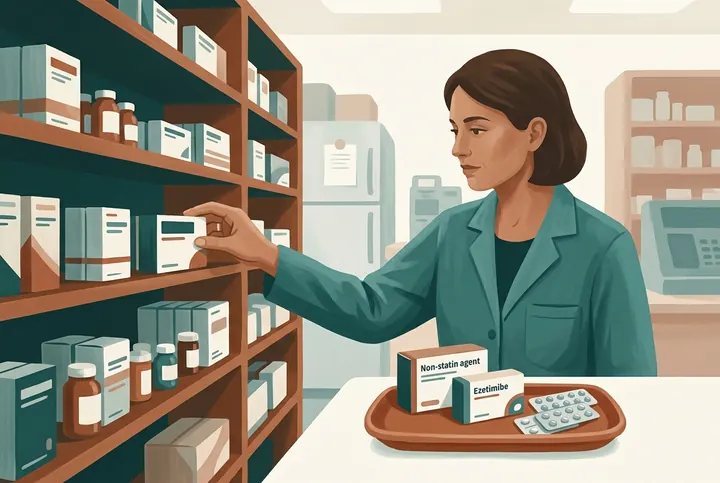
Beyond the max statin: what the 2025 ACS guideline changes about the drugs
Ticagrelor or prasugrel over clopidogrel as the default P2Y12 inhibitor. High-intensity statin for every ACS patient, with ezetimibe available at the start. A nonstatin agent when LDL-C is 70 or above on maximally tolerated statin. The three that change pharmacy work.
The Promotion Paradox: Why Hospital Pharmacy Roles Feel Unattainable (Even When They're Unfilled)
Why a department can be short and hiring nothing at the same time, the succession vacuum that decides who gets picked, the two things to negotiate on a move into management, and the four contributions a hiring panel can actually verify.
Why a 1.5-Minute Time Save Is Winning Over Pharmacists: The Truth About Ambient AI
41 pharmacists at one health system were given ambient documentation licenses. They used it for 65% of eligible encounters and saved 86 seconds of note time per visit, while reporting larger improvements in documentation burden and undivided attention. Burnout was studied and not reported as improved.
The Ghost in the Order Set: Why the Disappearance of Andexxa is a Documentation Emergency
The only targeted reversal agent for apixaban and rivaroxaban is gone. 4F-PCC, which most hospitals were already using, is what remains. What changed, what did not, and the four documents that still name a drug no US hospital can obtain.
The DSCSA "Small Dispenser" Deadline: Why Your Pharmacy Might Already Be Out of Compliance
Four DSCSA deadlines have passed; one is left. The small dispenser test is 25 or fewer full-time licensed pharmacists and pharmacy technicians across the corporate entity that owns the pharmacy. How to do the count, and the five requirements that apply when the exemption ends.
The 2025 hypertension guideline: a new calculator that will not change your prescription
The 2025 AHA/ACC guideline replaced the Pooled Cohort Equations with PREVENT and gave cognitive protection a Class 1 recommendation. It held the 130/80 threshold, the target and the first-line drug classes. What that means for order verification and for a service line.
The Return of the Target: Why the 2026 Lipid Guidelines Change Everything for Patients and Providers
Numeric LDL-C goals return: under 55 for very high-risk ASCVD, under 70 for clinical ASCVD and high-risk primary prevention, under 100 otherwise. PREVENT-ASCVD replaces the Pooled Cohort Equations, and Lp(a) becomes a once-in-a-lifetime measurement for every adult.

The "Invisible" Authority: Why 1 in 5 Hospitals Already Have Pharmacists Prescribing (And How Yours Can Too)
The 2024 ASHP survey put pharmacist independent prescribing at 18.5% of hospitals. What that number counts, the three layers of approval behind it, and how a pharmacist starts a collaborative practice agreement in a department that does not have one yet.

How to Stop Being Fooled by Clinical Trial Headlines: 7 Stats Lessons for the Modern Practitioner
Relative against absolute, what a p-value does not say, why a wide confidence interval and a narrow one can both "fail to reach significance" and mean opposite things, composite outcomes, what a trial was powered for, subgroups, and posterior probability.
The Great Prophylaxis Pivot: Why We Were Wrong About ICU Stress Ulcers
In invasively ventilated patients the evidence now supports prophylaxis: 2.5 percentage points absolute, about 40 patients per bleed prevented, no mortality difference and no increase in ventilator-associated pneumonia or C. difficile. Outside that population nothing changed, and that is where the overuse is.
The $232.50 Paradox: Why the Newest Non-Opioid is Splitting Expert Opinions
Suzetrigine beat placebo in both registration trials, matched hydrocodone/acetaminophen in one and lost to it in the other. At $232.50 a course, the entire value case rests on an assumed 0.43% risk of opioid use disorder from a one-week opioid course. Restriction criteria that survive both readings.
It's Not Just a Drug Change: Why the New Stroke Guidelines Are Really About Saving Time, Not Just Brain Cells
Tenecteplase is 0.25 mg/kg to a maximum of 25 mg as a single bolus over 5 to 10 seconds. Alteplase is 0.9 mg/kg with a 10% bolus and a 60-minute infusion. Both are recommended in the 4.5-hour window. What the switch actually changes in a stroke workflow.
Why Everything You Know About Drug Shortage Numbers is Probably Wrong (and What to Track Instead)
ASHP counts 227 active shortages as of Q2 2026. USP counts 75 at the end of 2025. The difference is what each one counts. Meanwhile the average shortage now lasts 5.3 years, up from about 2 in 2019, and duration is the number that predicts department workload.
Where the jobs went: the 2026 pharmacist labor market, in the actual numbers
The May 2025 federal wage data is the first year hospital hiring did not offset the retail decline. Where the remaining growth actually is, what the projections do and do not say, and how to read a market that is moving in two directions at once.
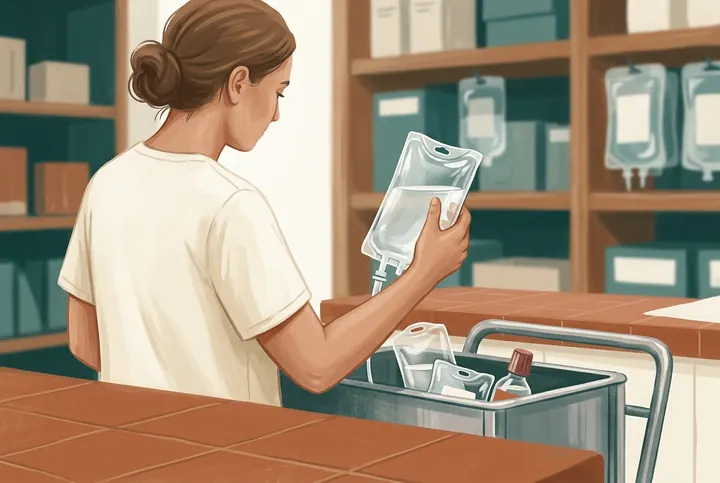
The 89% Bet: Why Your ICU Needs a New Default Fluid (And One Critical Exception)
SMART found a 1.1 point absolute reduction in major adverse kidney events. BaSICS and PLUS found nothing. The pooled risk ratio is 0.96 with a 95% CI of 0.91 to 1.01 and an 89.5% posterior probability of benefit. What that supports as a default, and the one carve-out.
The $17,000 Discrepancy: Which Pharmacist Salary Number Should You Use to Ask for a Raise?
The federal wage survey and the national workforce study disagree by $17,000 on hospital pharmacist pay, because one asks employers about wages and the other asks pharmacists about salary. Which number answers which question, and the three to bring to a review.

The Heavier Hour: Why Pharmacists Are Working Less but Feeling More Burnt Out
Hours fell about 5% while workload ratings rose 7 points. Hospital technician vacancy is 12.3% with 26.9% turnover, which is the strongest available explanation for where the extra work came from. What to measure, and what a staff pharmacist can raise.
The Invisible Wall: Why You Can't Apply Your Way Into Pharmacy Informatics (and the 6 Projects That Will Get You In)
Epic certification requires employer sponsorship, so applying from outside hits a credential no individual can buy. From inside a hospital it becomes a budget line. Here are the six projects that get a pharmacist sponsored, and what to volunteer for.
Your Boss is Paying: Don't Waste Your Training Budget on the Wrong Pharmacy Certificate
Board certification, certificate training programs and CE hours are not interchangeable. Board certification has a real eligibility gate that rules it out for many pharmacists today. Here is how to tell which applies to you before spending the budget.
The Lighthouse Trap: Why Fewer Pharmacy Graduates Might Not Save Your Career
Applicants fell 62% in a decade and graduates 24% from the 2018 peak. The contraction has already made residency substantially easier to enter. It has not slowed the retail contraction at all. Which one applies depends on what you want next.
The Pharmacy Shortage Myth: Why Both Sides of the Argument Are Right (and Wrong)
Pharmacist vacancy is about 4.7%, which is not a shortage. About 60% of departments report insufficient staffing for advanced clinical roles, which is. Retail shed 8,200 positions in 2025 while hospitals added 3,000. All three are true at once.
The $35,000 Gap: Why Some Night-Shift Pharmacists Earn $175k (and Others Don't)
Seven-on seven-off overnight roles reported $140k to $175k in the same thread. The difference is whether you are paid for 80 hours while working 70, and how differentials stack. What to ask before accepting, and the trade that surfaces around year five.
The Technician Vacancy Multiplier: Why Pharmacy Departments are Misallocating PharmD Labor
Nine in ten hospital pharmacy departments reported using pharmacists to do technician work. Pharmacist vacancy is 4.7%. Technician vacancy peaked above 22%. What that costs a department, and the credentials now arriving to fix it.

The $90,000 Reality Check: Is a Mid-Career Residency Actually Worth It?
The PGY1 match got easier between 2021 and 2026, but almost none of that reached applicants who had already graduated. What the data says, what a residency year costs, and what board certification does and does not replace.

From retail to hospital: what actually gets you through the first 90 days
Hospital onboarding is rarely structured, so most of what feels like missing clinical knowledge is missing navigation, and navigation is fixable in an afternoon. The four things to build in your first ninety days, plus the residency benchmark to bring to your manager.
Why Your Drug Shortage Strategy is Probably Wrong: Lessons from a Single Thread
Roughly 60% of US and European crude heparin comes from Chinese pigs, and that supply has already failed twice. The test that identifies products like it, and the four questions to run on your own high-risk list before the next disruption.
Is Your Pharmacist Salary Actually Falling Behind? The Missing Metric in the "Fair Pay" Debate
Pharmacist pay rose 2.7% in 2025, ahead of inflation. The premium over the average healthcare worker fell from 54% to about 30% in a decade. Both are true, and the second one explains why the raise does not feel like one.

The Pharmacy Automation Myth: Why AI is Already Here (But Not Replacing You)
48.5% of hospital pharmacy leaders use AI in some capacity and 23.7% use it daily, mostly for communications, diversion detection and data synthesis. The barrier they name most is training, not capability. What that says about displacement, and about provider status.
No posts match those filters yet.